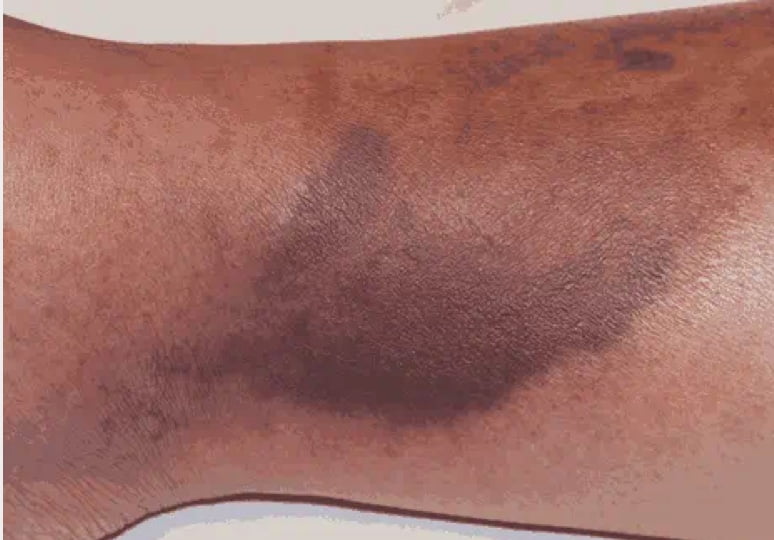
About ITP (Immune Thrombocytopenia)
Recent updates to the nomenclature, diagnostic threshold, and classifications
Change in nomenclature: Idiopathic thrombocytopenic purpura was named for its unknown etiology and the mild to major bleeding events that often arise with the platelet deficit. Because of the immune-mediated nature of the disease and the presence of few or no bleeding symptoms in many patients, experts now refer to it as immune thrombocytopenia (still abbreviated ITP). [9][10]
Standardized diagnostic threshold: Although a platelet count of < 150 x 109/L has been widely used to diagnose primary ITP, a prospective study of otherwise healthy individuals with platelet counts within the 100 to 150 x 109/L range showed that these individuals had a low 10-year probability of developing more severe thrombocytopenia.[9][11] Therefore, experts have recently established a platelet count of < 100 x 109/L with no obvious initiating and/or underlying causes as the diagnostic threshold for primary ITP.[9]
New classifications: Previously, ITP was classified as either acute (≤ 6 months’ duration) or chronic (> 6 months’ duration).[12] Experts have established new classifications for ITP based on disease duration[9][10]:
- Newly diagnosed (within 3 months of diagnosis)
- Persistent (3 to 12 months’ duration)
- Chronic (≥ 12 months’ duration)
Have questions about ITP? Talk with a live representative
The dual challenge in ITP: Excess platelet destruction and suboptimal platelet production[13–16]
- As reported in recently published expert recommendations, including the American Society of Hematology (ASH) ITP clinical guideline update and the International ITP Consensus Report (ICR), ITP was previously considered a disease involving immune-mediated platelet destruction. However, it is now recognized as a disease that involves both platelet destruction and suboptimal platelet production.[10][17]
Have questions about platelet production in ITP?
INDICATION
Nplate® is a thrombopoietin receptor agonist indicated for the treatment of thrombocytopenia in patients with chronic immune thrombocytopenia (ITP) who have had an insufficient response to corticosteroids, immunoglobulins, or splenectomy.
Nplate® is not indicated for the treatment of thrombocytopenia due to myelodysplastic syndrome (MDS) or any cause of thrombocytopenia other than chronic ITP. Nplate® should be used only in patients with ITP whose degree of thrombocytopenia and clinical condition increase the risk for bleeding. Nplate® should not be used in an attempt to normalize platelet counts.
Important Safety Information
Risk of Progression of Myelodysplastic Syndromes to Acute Myelogenous Leukemia
- In Nplate® clinical trials of patients with myelodysplastic syndromes (MDS) and severe thrombocytopenia, progression from MDS to acute myelogenous leukemia (AML) has been observed.
- Nplate® is not indicated for the treatment of thrombocytopenia due to MDS or any cause of thrombocytopenia other than chronic ITP.
Thrombotic/Thromboembolic Complications
- Thrombotic/thromboembolic complications may result from increases in platelet counts with Nplate® use. Portal vein thrombosis has been reported in patients with chronic liver disease receiving Nplate®. Nplate® should be used with caution in patients with ITP and chronic liver disease.
- To minimize the risk for thrombotic/thromboembolic complications, do not use Nplate® in an attempt to normalize platelet counts. Follow the dose adjustment guidelines to achieve and maintain a platelet count of ≥ 50 x 109/L.
Bone Marrow Reticulin Formation and Risk for Bone Marrow Fibrosis
- Nplate® administration may increase the risk for development or progression of reticulin fiber formation within the bone marrow. This formation may improve upon discontinuation of Nplate®.
- In a clinical study, one patient with ITP and hemolytic anemia developed marrow fibrosis with collagen during Nplate® therapy. Clinical studies are in progress to assess the risk of bone marrow fibrosis and clinical consequences with cytopenias.
- If new or worsening morphological abnormalities or cytopenia(s) occur, consider a bone marrow biopsy to include staining for fibrosis.
Worsened Thrombocytopenia after Cessation of Nplate®
- In clinical studies of patients with chronic ITP who had Nplate® discontinued, four of 57 patients developed thrombocytopenia of greater severity than was present prior to Nplate® therapy. This worsened thrombocytopenia resolved within 14 days.
- Following discontinuation of Nplate®, obtain weekly CBCs, including platelet counts, for at least 2 weeks and consider alternative treatments for worsening thrombocytopenia, according to current treatment guidelines.
Lack or Loss of Response to Nplate®
- Hyporesponsiveness or failure to maintain a platelet response with Nplate® should prompt a search for causative factors, including neutralizing antibodies to Nplate®.
- To detect antibody formation, submit blood samples to Amgen (1-800-772-6436). Amgen will assay these samples for antibodies to Nplate® and thrombopoietin (TPO).
- Discontinue Nplate® if the platelet count does not increase to a level sufficient to avoid clinically important bleeding after 4 weeks at the highest weekly dose of 10 mcg/kg.
Laboratory Monitoring
- Obtain CBCs, including platelet counts, weekly during the dose adjustment phase of Nplate® therapy and then monthly following establishment of a stable Nplate® dose.
- Obtain CBCs, including platelet counts, weekly for at least two weeks following discontinuation of Nplate®.
Adverse Reactions
- In the placebo-controlled studies, headache was the most commonly reported adverse drug reaction, occurring in 35% of patients receiving Nplate® and 32% of patients receiving placebo. Headaches were usually of mild or moderate severity.
- Most common adverse reactions (≥ 5% higher patient incidence in Nplate® versus placebo) were Arthralgia (26%, 20%), Dizziness (17%, 0%), Insomnia (16%, 7%), Myalgia (14%, 2%), Pain in Extremity (13%, 5%) , Abdominal Pain (11%, 0%), Shoulder Pain (8%, 0%), Dyspepsia (7%, 0%), and Paresthesia (6%, 0%).
Please see Prescribing Information and Medication Guide
Have questions about the Indication, Important Safety Information, Prescribing Information or Medication Guide?
THE NPLATE® FIRST STEP™ PROGRAM
Helps your eligible commercially insured patients who are appropriate for Nplate® treatment meet their out-of-pocket costs.
Learn How To Enroll Your PracticeACCESS THE NPLATE® CLINICAL DATA YOU NEED
Clinical studies have evaluated the safety and efficacy of Nplate® treatment in adult patients with chronic ITP. Nplate® clinical trials have been conducted in both splenectomized and non-splenectomized patients, with some patients receiving Nplate® treatment for > 5 years.
Review Nplate® Clinical Data